Bigger Isn’t Always Better… But Sometimes It Is
There was a time—not too long ago—when my job was to sit across from guests in the middle of their holiday and talk about the next one. I was working as a Future Voyage Concierge onboard the The Ritz-Carlton Yacht Collection, which, in simple terms, means you come to me while you’re still enjoying a glass of wine, slightly sun-kissed, fully relaxed, and say, “Alright… where are we going next?” It’s a wonderful moment to catch someone, because they’re not thinking in spreadsheets or comparisons—they’re thinking in feelings. And yet, almost inevitably, at some point in that conversation, the same question would surface: should we go for the bigger suite?
It sounds simple. It never is. Because what people think they’re asking is whether a bigger suite is better, when in reality what they’re trying to understand—without quite putting it into words—is what kind of traveler they are. And once you’ve had that conversation enough times, with enough different people, you start to realize that the answer has very little to do with the suite itself and almost everything to do with how someone lives their trip.
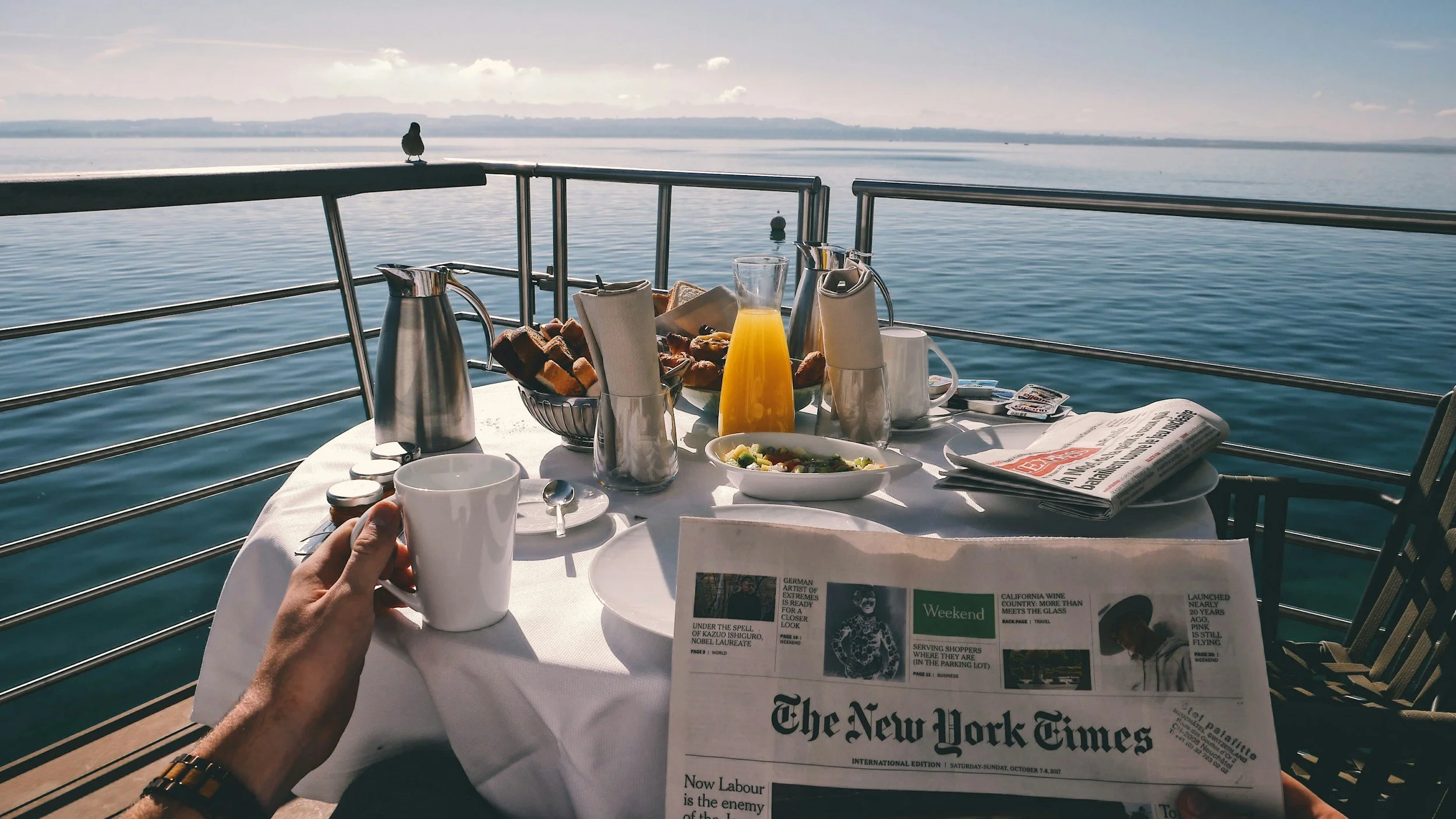
I’ve seen guests book the smallest suite on board and disappear into the experience entirely, barely spending time in the room, using it as nothing more than a place to reset between long lunches ashore, spontaneous dinners, and evenings that stretch just a little longer than planned. For them, the suite is elegant, comfortable, perfectly sufficient—and anything beyond that would simply go unused. And then I’ve seen the opposite: guests who turn their suite into an extension of the journey itself, who move slowly through their mornings, who sit on the terrace with coffee, who enjoy the ritual of getting ready in the evening, who value the space not as a necessity, but as part of the experience they’ve chosen to create. Same yacht, completely different way of living it.
That’s where the conversation becomes interesting, because it shifts away from price and into behavior. Take something as unglamorous as storage. On these newer yachts, even the first suite category is beautifully designed, incredibly well thought out, but still, by nature, more compact when it comes to closets and storage. If you travel light, you won’t think about it twice. But if you’re someone who travels with options—different outfits, proper shoes, maybe something for an unexpected change in weather—then suddenly the idea of space becomes very real. Larger suites tend to offer walk-in closets, separate areas for luggage, and the simple luxury of unpacking once and forgetting about it. It’s not dramatic, it’s not something you photograph, but it changes how you feel in the space over time.
And that feeling is closely tied to something most people don’t consider early on: the itinerary. A short Caribbean escape is one thing—you pack light, you’re rarely in the room, the rhythm is fast and easy. A longer journey, through Northern Europe or Japan, is something else entirely. More days, more weather variations, more occasions, more time to settle in, and often more things acquired along the way. In that context, your suite stops being a place you return to and becomes a place you live in, and when that happens, the value of space starts to reveal itself in a much more practical way.
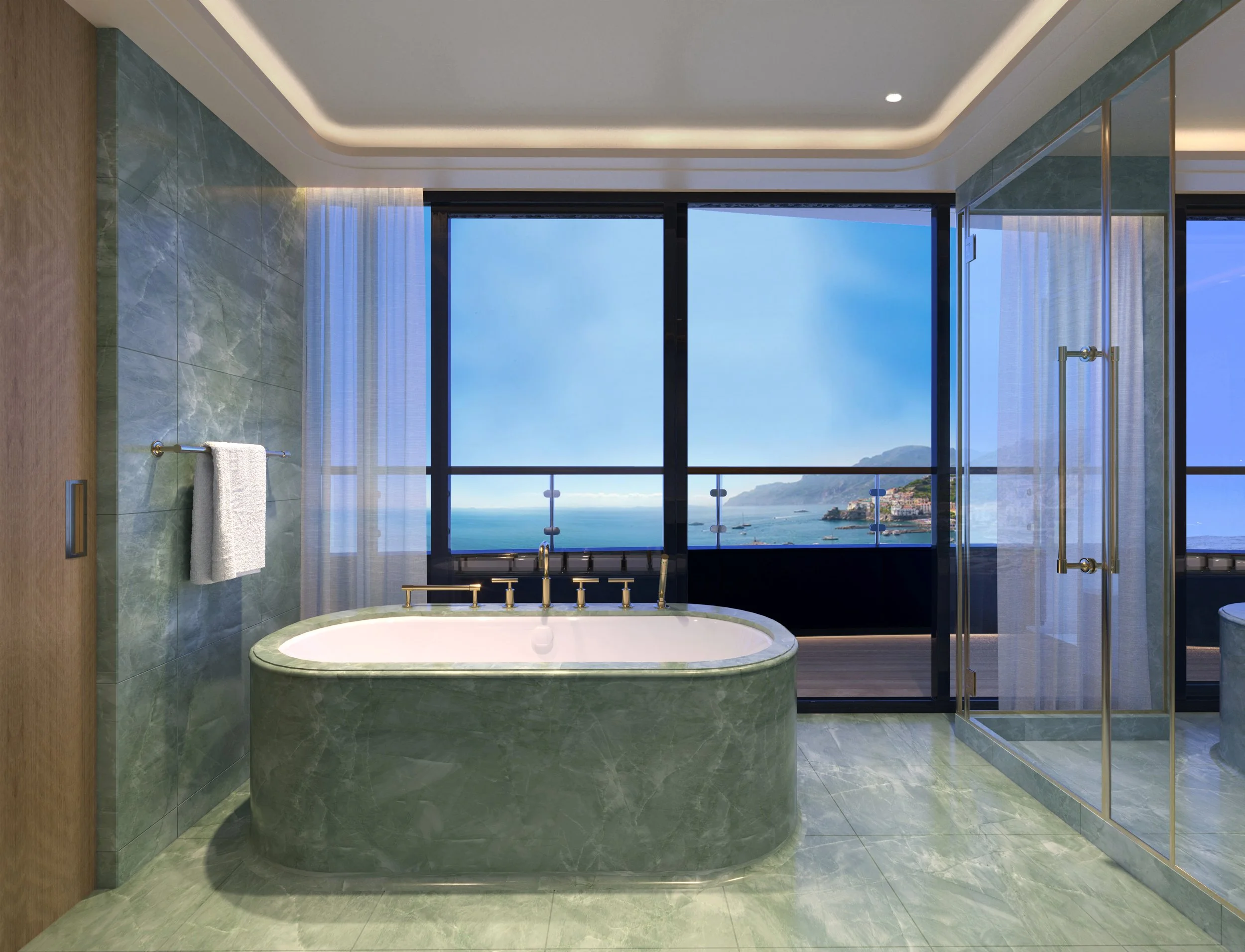
From there, the difference is no longer just about how much space you have, but about what that space allows you to do. Bathrooms are a perfect example. Even the most basic suites already offer double vanities and a level of comfort that most travelers would consider generous, but once you step into higher categories, you begin to notice additions that quietly elevate the experience: full bathtubs, sometimes an additional bathroom or a half bath, and suddenly the logistics of getting ready—especially with more than one person—become effortless instead of negotiated. It’s one of those details that doesn’t sell the suite, but once you have it, you understand exactly why it matters.
The same applies to the living space. If you’re someone who travels quietly, keeps to yourself, moves through the ship and the destinations without much intention of hosting or gathering, then a smaller sitting area is perfectly adequate. But if you’re the type who enjoys people—if a drink before dinner turns into a small group, if you like the idea of inviting someone in, or even just having your family together in one space without feeling confined—then the presence of a proper living room, a dining table for four or six, becomes far more than just extra furniture. It becomes flexibility. It becomes the difference between using the suite and adapting to it.
And then there’s the part most people underestimate entirely: the terrace. What’s fascinating is that bigger doesn’t always mean higher, and higher doesn’t always mean better. On many of these yachts, the lower decks often come with deeper, more usable outdoor spaces simply because of the way the vessel is designed. As you move up, the structure narrows, and with it, the terrace space. So you can find yourself in a smaller suite on a lower deck with a terrace that feels significantly more generous than one attached to a higher-category suite above. And if you’re someone who enjoys being outside—breakfast in the morning, a quiet moment in the sun, a glass of wine in the evening—that detail alone can completely redefine what “better” means for you.
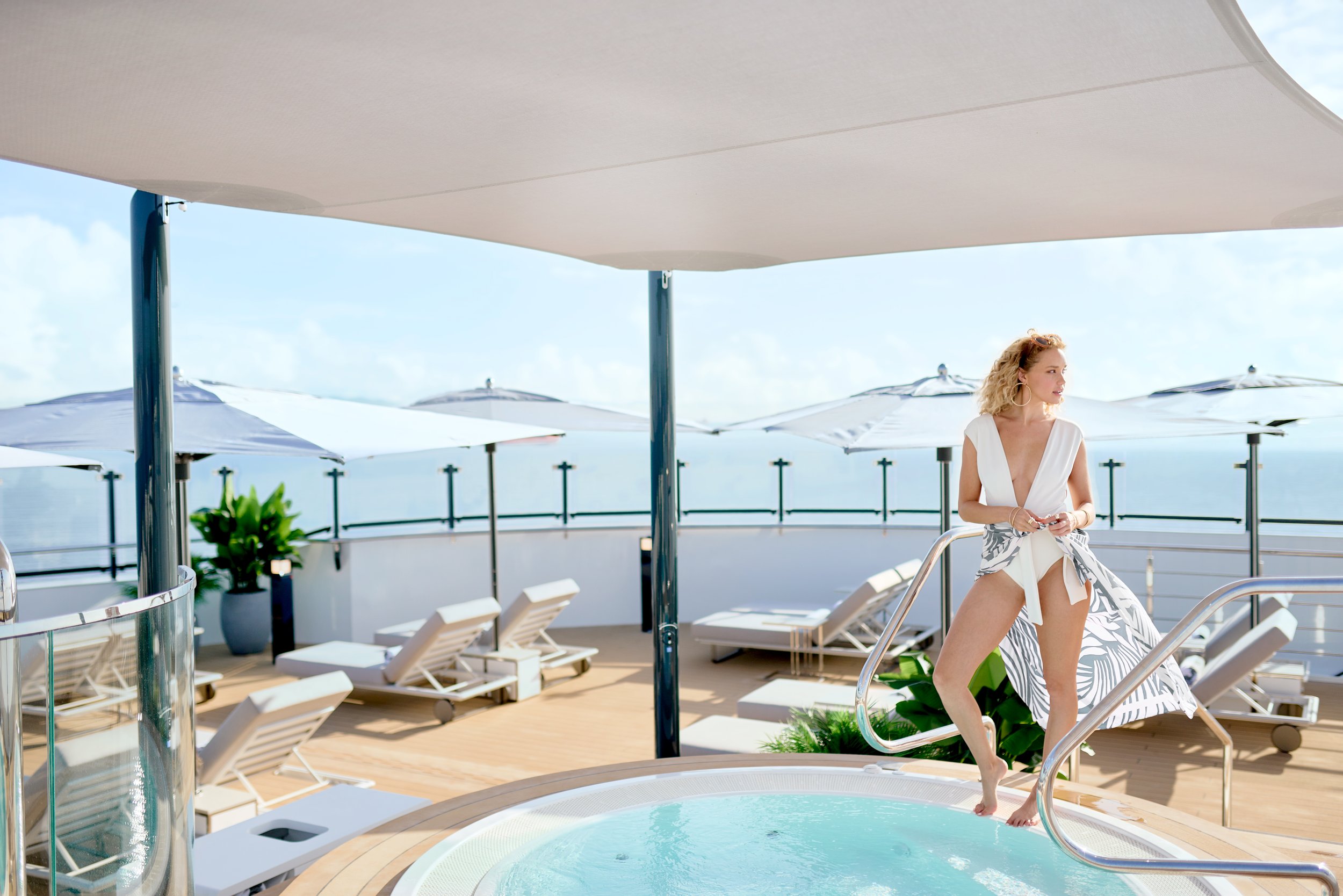
Of course, there are moments where practicality steps aside and we simply admit what this is really about. Private whirlpools, expansive terraces, that extra sense of privacy—these are not necessities, and they’re not meant to be justified in logical terms. They exist for a different reason entirely. Sometimes, the experience you’re looking for is one where you don’t have to share anything—not the space, not the view, not the moment—and when that’s the case, the decision tends to make itself.
And finally, there’s a layer that sits quietly in the background but is worth mentioning. On many of these yachts, larger suites often come with additional benefits—not in a way that defines the decision, but in a way that complements it. Different categories may include enhanced welcome amenities, more thoughtful touches upon embarkation, or services like transfers and special inclusions throughout the voyage. None of these are the reason someone chooses a suite—you’re not selecting your accommodation because of a bottle of champagne or a welcome gift—but they do reflect something important. They show that the experience is being considered as a whole, and that the choice, whichever one you make, is meant to feel intentional and well-supported.
And that, in the end, is really the point. A bigger suite is not automatically a better experience, but for the right person, on the right itinerary, with the right expectations, it can transform the way a trip feels in ways that go far beyond square footage. The real question isn’t whether you should go bigger. It’s whether the way you travel will allow you to actually enjoy what that extra space gives you.
“Don’t book the biggest suite you can afford… book the one you’ll actually enjoy—and if those happen to be the same, well… give me a call and book it with me ;)
